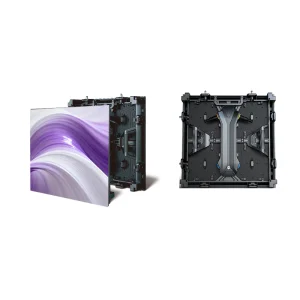
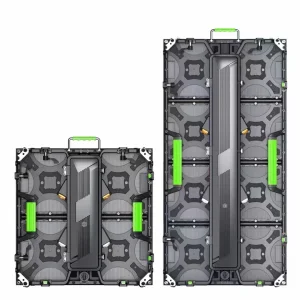
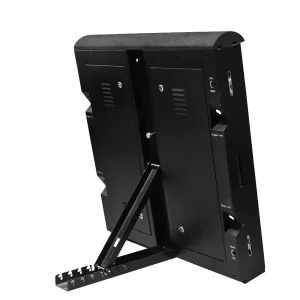
Engineered for high brightness, structural versatility, and pixel-level color fidelity.
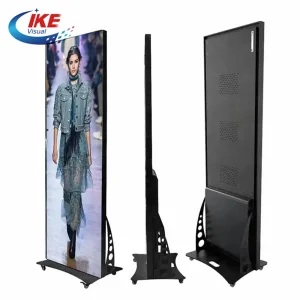
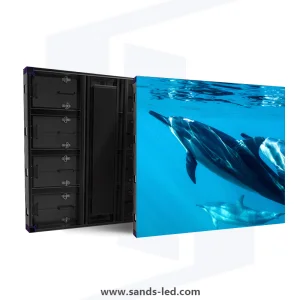
Understanding the transition from static signage to dynamic digital experiences.
The modern retail ecosystem demands more than mere visibility. For global brands, visual touchpoints are essential elements of brand positioning, customer retention, and conversion architecture. Integrated digital-out-of-home (DOOH) installations are transforming high-street retail, shopping centers, and multi-tenant commercial structures from static functional units into highly immersive environments.
When procurement officers, commercial architects, and visual display designers source LED screen solutions, their evaluations extend beyond basic unit prices. Modern procurement frameworks focus heavily on lifetime reliability, thermal dissipation profiles, power conservation metrics, and mechanical mounting adaptability.
Key global parameters shaping B2B procurement decisions include:
A comparative matrix analyzing production standards, quality control paradigms, and value delivery models.
Finding a reliable supplier in the competitive commercial screen market requires comparing multiple factors. While top-tier providers offer high quality, they often carry premium pricing. Meanwhile, agile manufacturers like Shenzhen Aras LED Co., Ltd. (LUMIVIS) bridge the gap by offering premium build qualities, robust engineering customization, and industrial capacity at cost-efficient price points.
| Manufacturer Tier Group | Primary Technology Specialty | QC & Testing Methodology | Lead-Time Performance | Value Proposition Rating |
|---|---|---|---|---|
| Enterprise Conglomerates | Narrow-pixel pitch, COB, micro-LED | Standard automated inspection, generic burns | 4 to 8 Weeks (Complex pipelines) | Medium (High brand markup) |
| Direct-to-Factory Partners (Aras LED/LUMIVIS) | Custom Commercial Displays, Transparent Glass, Sports Perimeter, Stage Rental | AOI + -30°C~60°C Thermal Cycles + 72hr Full Run Aging | 1 to 10 Business Days (Agile scale) | Excellent (Premium quality without brand premiums) |
| Niche Custom Integrators | Irregular physical forms, organic curved shapes | Basic manual testing | 6 to 10 Weeks | Low-Medium (High customization surcharges) |
By bypassing multi-tier broker channels, retail enterprise buyers reduce component miscommunications and significantly cut down delivery cycles. Standard OEM/ODM pipelines often require months for design adjustments; however, an integrated facility like Aras LED delivers fully verified custom shapes, cabinet dimensions, and calibrated color parameters within 10 working days, helping clients quickly capture emerging market opportunities.
Based in the global hardware innovation hub of Shenzhen, China, Shenzhen Aras LED Co., Ltd. is a dedicated manufacturer of premium LED display screens. Our facilities are built to address high-volume corporate contracts, system integrator requirements, and specialized custom retail installations.
Our production facilities feature integrated assembly, cabinet fabrication, environmental simulation labs, and optical calibration systems. By keeping these critical processes in-house, we eliminate third-party delays and maintain strict quality standards across all production runs.
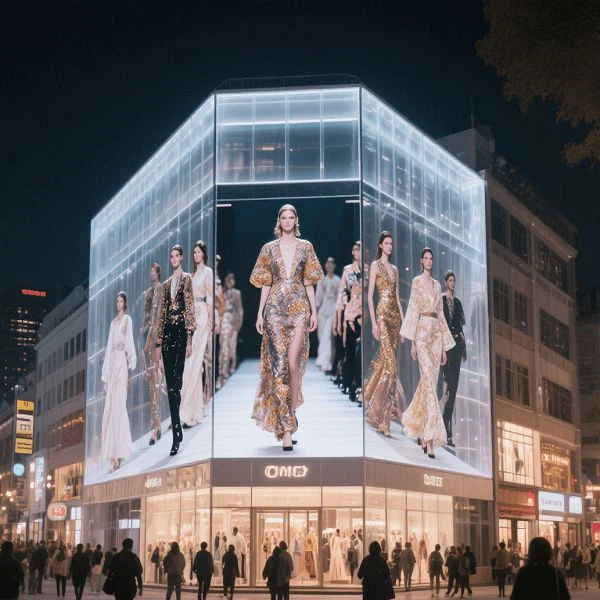
Our commitment to zero-defect performance across all retail installations.
Using high-speed optical scanning, our automated systems check component placement, solder integrity, and diode alignment to identify microscopic manufacturing variations before the assembly stage.
We test our panels in extreme simulated environments ranging from -30°C to 60°C. This ensures solder joins and LED diodes can handle rapid temperature changes without failures.
Every batch undergoes pixel-level color and brightness calibration. Using spectroradiometer instruments, we adjust gamma curves and color uniformities to deliver consistent visuals across the screen.
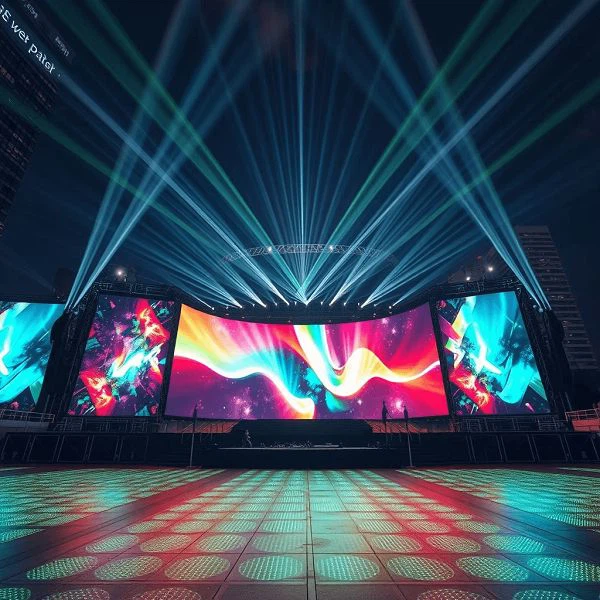
Providing reliable performance across complex retail configurations.
Bright natural light can wash out standard commercial screens. Our high-brightness outdoor and window-facing LED systems deliver up to 5,500 nits, keeping visuals clear and visible even in direct sunlight. Additionally, our specialized transparent LED panels maintain natural light flow and visibility inside the store.
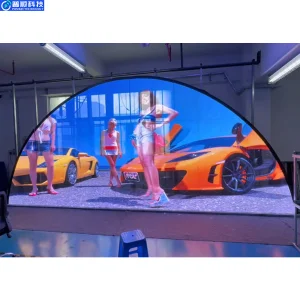
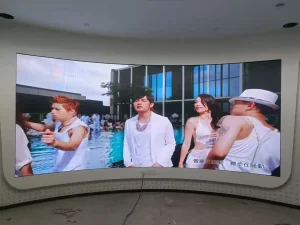
Modern commercial buildings often feature non-linear walls and organic layouts. Using flexible, magnetic-mounting LED modules and customizable cabinet profiles, we build curved, circular, and geometric video displays that integrate smoothly into existing structures.
For point-of-sale environments, clarity and readability are essential. Our narrow-pixel pitch screens (P1.25, P1.56, P1.8) deliver sharp text, vibrant food imagery, and high refresh rates to keep displays clear under instore cameras and lighting.
High-traffic athletic retailers and sports arenas need durable display systems. We engineer specialized outdoor stadium perimeters with soft rubber face masks and impact-resistant cabinet frames to protect the hardware while keeping players safe.
Understanding the transition to Chip-on-Board (COB) and interactive retail display architectures.
Traditional Surface Mount Devices (SMD) are prone to diode damage in high-traffic retail environments. Chip-on-Board (COB) and Glue-on-Board (GOB) technologies seal the diodes behind a protective epoxy layer. This provides excellent resistance against moisture, dust, and physical impact while improving contrast ratios and heat dissipation.
As pixel pitches shrink below 1mm, MicroLED technology is becoming the standard for ultra-close viewing distances in luxury environments. MicroLED displays provide deeper blacks, higher contrast ratios, and lower power consumption, making them ideal for high-end boutique stores.
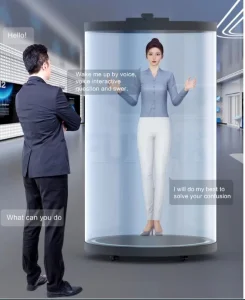
Modern retail displays are evolving beyond static playback. By integrating motion-tracking sensors, RFID product bases, and audience analysis cameras, our displays can adjust their content dynamically based on customer movement, engagement patterns, and demographics.
Providing reliable quality and localized integration across international markets.
Global logistics and installations require strict compliance with international standards. To ensure safety, electrical efficiency, and electromagnetic compatibility, all LUMIVIS and Aras LED systems are built to meet CE, FCC, RoHS, and UL safety standards.
Our global services include technical pre-sales planning, customized pixel layouts, remote calibration support, and ready-to-ship replacement modules to minimize system downtime.
Designed for visual clarity, stability, and long-term durability in high-traffic settings.
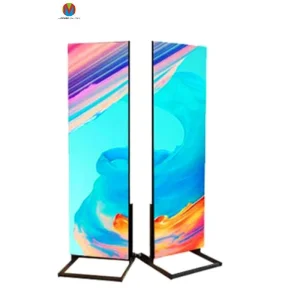
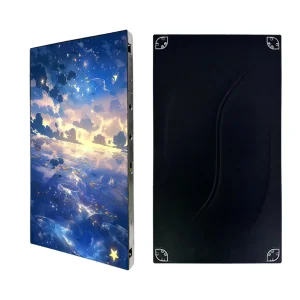
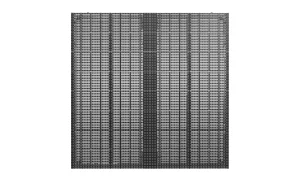
Addressing common technical questions from procurement officers and system integrators.
 Aras LED