MiniLED Display Manufacturer & Factory for the São Paulo Market

High-Density Intelligent MiniLED Solutions Engineered for Latin America's Largest Financial & Commercial Hub

The Dynamics of the São Paulo Commercial Display Ecosystem

As the economic engine of Brazil and Latin America, São Paulo demands next-generation display technology that combines high aesthetic standards with robust physical performance. From the banking headquarters on Avenida Brigadeiro Faria Lima to the flagship luxury stores on Rua Oscar Freire and the massive trade expos at São Paulo Expo, visualization is key to capturing consumer attention and conveying modern brand values.

However, the local market comes with highly specific challenges. Displays deployed in São Paulo must comply with local brightness and architectural ordinances (such as the Lei Cidade Limpa regulating outdoor media footprint) while being capable of surviving the tropical climatic variations characterized by sudden shifts in humidity and high ambient sunlight. This has created a decisive migration away from traditional low-contrast SMD panels toward state-of-the-art MiniLED systems.

Our company, Shenzhen Aras LED Co., Ltd. (LUMIVIS), serves as the direct-to-factory engineering and supply partner for Brazilian integrators, offering products that are tailor-made to withstand local electrical conditions, structural specs, and aesthetic criteria.
MiniLED Factory Assembly Line

Global MiniLED Standards: Technology & Performance Indicators

Understanding the technological shift from standard LED backlighting to Sub-Millimeter Light Emitting Diode technology.

MiniLED displays represent a fundamental revolution in micro-scale semiconductor manufacturing. By reducing the physical size of individual LED chips to under 200 micrometers, we pack thousands of local dimming zones into a single display unit. This technical advantage results in contrast ratios that approach OLED standards while achieving dramatically higher peak brightness and avoiding the catastrophic burn-in degradation common to organic pixels.

Sub-Millimeter Backplane & Active Matrix: Enables localized light source control down to a fraction of a millimeter. By using Active Matrix (AM) driver ICs, we completely eliminate screen flicker (PWM artifacts), creating a comfortable viewing experience for high-traffic corporate lobbies and public transport hubs.
192-Zone to 1000+ Zone Local Dimming: Our displays achieve true-to-life HDR10+ performance. By controlling individual dimming zones, deep blacks are rendered with zero halo effect (blooming), a critical factor for displaying fine text, digital art, or luxury retail media.
Wide Color Gamut & Quantum Dot Integration: By coupling MiniLED backlights with QLED enhancement films, our panels achieve over 95% DCI-P3 color space coverage, ensuring exact brand-color reproducibility for demanding international companies.
Extreme Thermal Dissipation: Unlike consumer-grade screens, our industrial MiniLED cabinets leverage aluminum-alloy structural frames with high thermal conductivity, guaranteeing stable operation in warm subtropical climates like São Paulo.

Shenzhen Aras LED (LUMIVIS): World-Class Manufacturing Strength

Bridging advanced Chinese semiconductor manufacturing efficiency with direct logistical pipelines to São Paulo.
30,000㎡
Monthly Production Capacity
1-10 Days
Industry-Leading Lead Time
72 Hours
Continuous Burn-In Testing
AOI & HS
Full Optical Inspection Standard
LUMIVIS LED Display Testing Facility

Full-Spectrum System Quality Control Standards

Operating a state-of-the-art production base in Shenzhen, China's international high-tech metropolitan hub, Shenzhen Aras LED Co., Ltd. (LUMIVIS) manufactures products characterized by longevity, robust color fidelity, and structural integrity. Every module destined for South America undergoes comprehensive verification checks:

  • Automated Optical Inspection (AOI): Scanning at the micro-level to spot sub-millimeter solder irregularities and LED placement errors before packaging.
  • Thermal Cycling Chambers: Extreme condition testing from -30°C up to 60°C to verify that structural resins, substrate bonding layers, and drive components do not separate under thermal shock.
  • Precision Calibration: Using advanced spectroradiometers to align all displays to precise D65 white points and calibrate uniformity across all panels.
  • Continuous Dynamic Load Testing: Running full-performance checks for 72 consecutive hours to rule out early component failures.

Macro Solutions: Strategic Deployments in São Paulo

How our product range maps to specific infrastructure, architectural, and business frameworks in São Paulo.

1. High-Traffic Retail & Shopping Malls

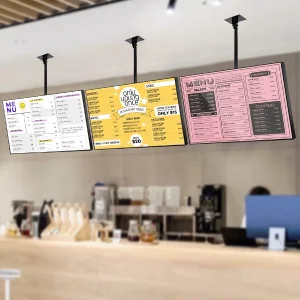
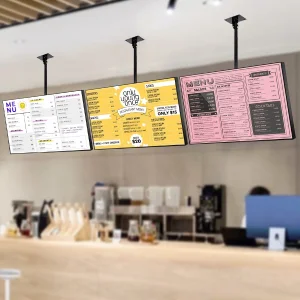
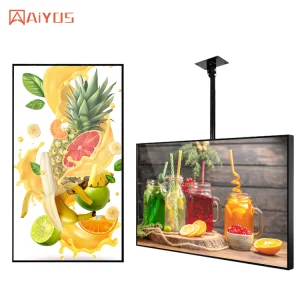
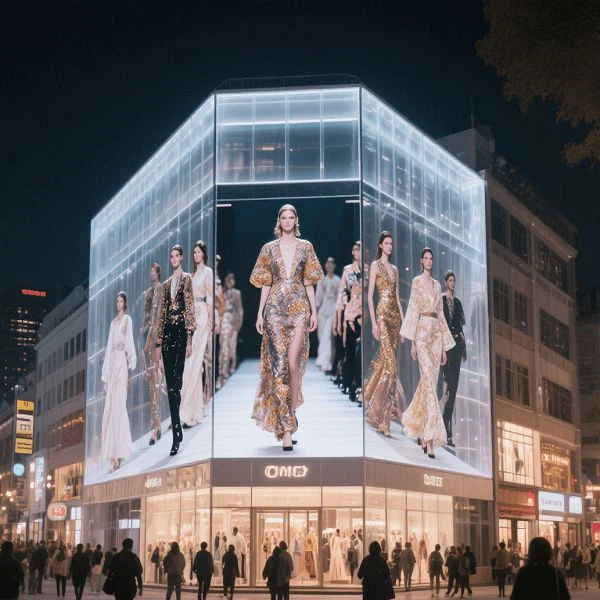
São Paulo houses some of the most luxurious shopping malls in the southern hemisphere (such as JK Iguatemi, Cidade Jardim, and Morumbi Shopping). Our high-contrast indoor MiniLED digital signage, featuring 192 local dimming zones and QLED color enhancement, provides brands with a premium medium to project visual campaigns with absolute accuracy.

2. Out-of-Home Transit Networks (DOOH)

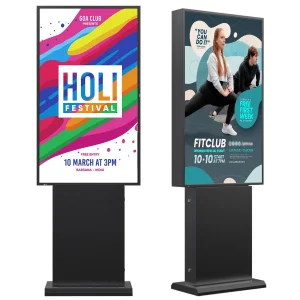
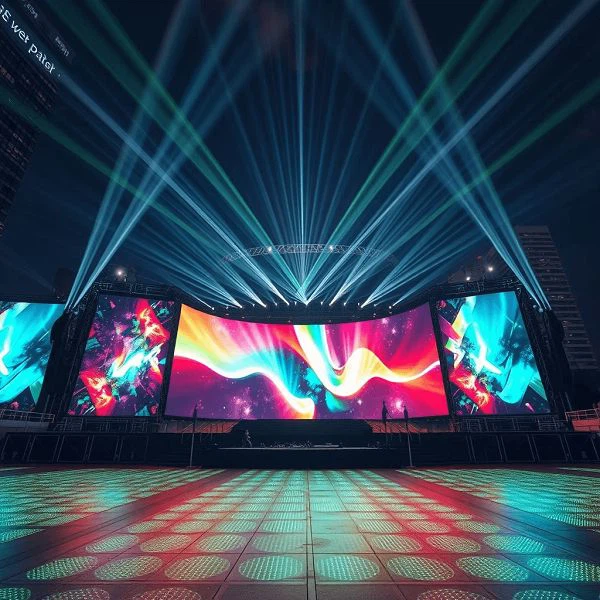
For transport hubs like Aeroporto Internacional de Guarulhos (GRU), Congonhas (CGH), and the major Metro stations (Linha 4-Amarela, Linha 2-Verde), we provide IP67 outdoor rugged displays. These systems feature high-brightness components that cut through intense midday solar radiation while managing active cooling for continuous performance.

3. Digital Galleries & Museum Displays

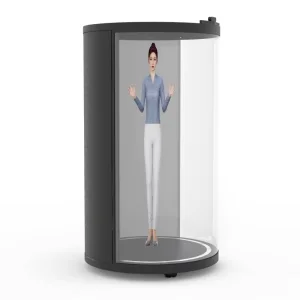
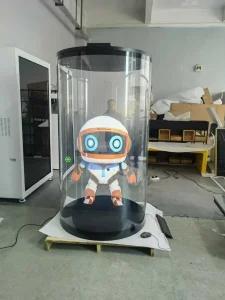
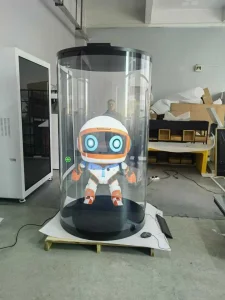
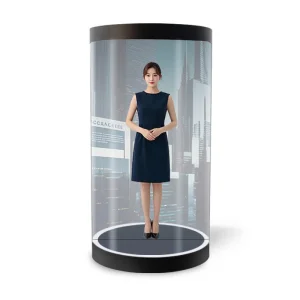
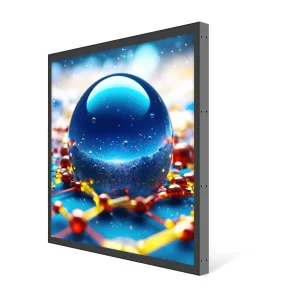
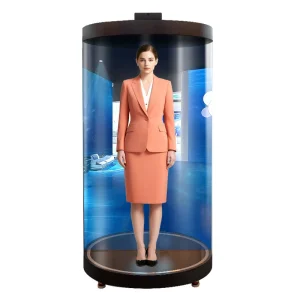
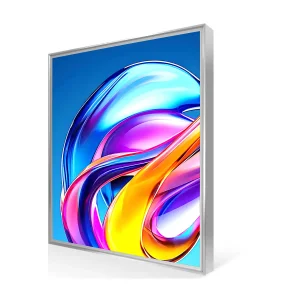
Art institutions like the Museu de Arte de São Paulo (MASP) and private galleries require precise display shapes and perfect aspect ratios to host dynamic digital exhibitions and NFT art. Our specialized 1:1 ultra-thin square monitors and interactive 3D Holotubes deliver high-definition visual performance that meets the high aesthetic requirements of contemporary artists and curators.

Technical Support & B2B Procurement FAQ

Answering the primary operational, logistical, and technical questions asked by Brazilian engineering partners.

How do LUMIVIS MiniLED displays comply with São Paulo's "Lei Cidade Limpa" regulations? +
São Paulo's Clean City Law restricts size and brightness configurations for outdoor public displays to mitigate visual and light pollution. Our controllers feature integrated ambient light sensors and programmatic scheduling software. This allows operators to dynamically adjust NIT output based on environmental lighting conditions, ensuring compliant, glare-free operation during night hours while keeping visibility sharp in full daylight.
What are the import procedures, shipping times, and tax routes to the Port of Santos? +
We provide full documentation for Brazilian customs clearance, including HS Codes, invoices, packing lists, and test reports. For high-volume projects in São Paulo, shipping from Shenzhen to the Port of Santos takes approximately 35 to 45 days. We work with leading local customs brokers to help clients clear imports smoothly, managing standard ICMS and import taxes efficiently.
Do your displays support local Brazilian power grid requirements? +
Yes, our displays are designed with universal switching power supplies that handle standard Brazilian grid variations (typically 127V or 220V at 60Hz). We use high-quality power components that protect against voltage spikes, which are critical for maintaining continuous operation in São Paulo's metropolitan area.
What is the standard warranty and maintenance model for Brazilian integrators? +
We offer a comprehensive 3 to 5-year warranty on our commercial-grade MiniLED components. We supply 2% to 5% spare modules, receiving cards, and power units with every shipment, allowing for quick on-site swaps. For large installations, we can coordinate with local technical teams in São Paulo to provide installation support and calibration services.
Why choose MiniLED over standard SMD LED for high-end retail? +
MiniLED features smaller diode sizes, which allows for tighter pixel pitches and higher pixel density. This makes individual pixels virtually invisible to shoppers standing close to the screen. In addition, MiniLED's local dimming capability allows for high contrast ratios (often exceeding 100,000:1) and better energy efficiency, which is a major factor given electricity prices in Brazil.