Delivering Heavy-Duty, High-Brightness Digital Display Solutions Engineered for the Delaware Valley Coastline & Regulatory Standards
Request Technical Specifications & PricingEngineered to withstand coastal Atlantic air currents, dense winter freezes, and humid summer seasons across Pennsylvania and Delaware Valley transit corridors.
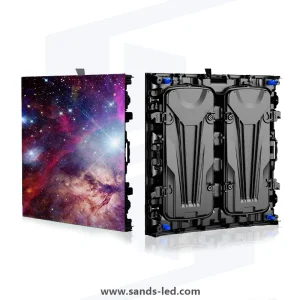
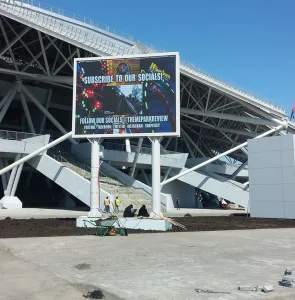
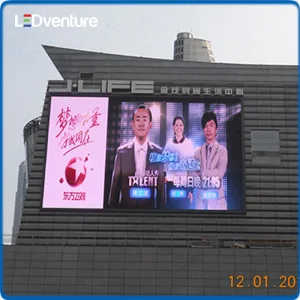
An engineering guide to digital-out-of-home (DOOH) compliance, wind load calculations, and environmental considerations for Mid-Atlantic installations.
Deploying a fixed outdoor LED display or digital billboard in the City of Philadelphia requires rigorous adherence to local regulations. The Philadelphia Department of Licenses and Inspections (L&I), along with the Philadelphia Zoning Board of Adjustment, enforces strict codes. All permanent structural installations must have site plans sealed by an actively licensed Professional Engineer (PE) in the Commonwealth of Pennsylvania.
Key regulatory codes to follow include:
Philadelphia experiences extreme seasonal temperature swings, ranging from sub-zero winter chills and heavy snowfall to humid summer heat waves exceeding 95°F. Near the Port of Philadelphia and the Delaware River, elevated humidity and airborne particulates can cause accelerated corrosion of electronic components.
Our standard production lines counter these environmental factors by applying a multi-layer conformal coating to all LED display modules, protecting IC drivers and PCB copper paths from salt-spray damage. Our heavy-duty cabinets employ advanced thermal modeling, relying on passive dissipation designs or dual-fan cooling systems to prevent heat accumulation that can degrade diode performance and cause color shifts over time.
Shenzhen Aras LED Co., Ltd. operates a high-precision manufacturing campus in Shenzhen, China. By consolidating module SMT (Surface Mount Technology), CNC cabinet fabrication, and automated optical inspections (AOI) under one roof, we eliminate intermediate markup layers. This direct-from-factory structure allows us to supply elite display components to Philadelphia integration firms, general contractors, and media networks at structural cost parity.
Our monthly production capacity of 30,000㎡ ensures that whether you are installing a single roadside bulletin along US-1 or outfitting a large sports complex in South Philly, our project managers can coordinate swift freight schedules, customs clearances, and secure local delivery to your job site.
Quality control at our facility is non-negotiable. Every outdoor cabinet undergoes a rigorous battery of tests before container loading. We perform automated optical inspection (AOI) to identify solder defects, along with high-impact thermal cycling tests from -30°C up to 60°C to guarantee resilience in Mid-Atlantic climates.
Additionally, we conduct 72-hour continuous burn-in tests at maximum power loads, calibrating each module with high-performance spectroradiometers to ensure color consistency and prevent panel patchiness.
| Pixel Pitch | Optimal Viewing Distance | Common Applications | Brightness Level |
|---|---|---|---|
| P3 / P4 | 10 – 30 feet | Pedestrian zones, transit hubs, Center City retail windows | 5,500 – 6,500 Nits |
| P5 / P6 | 16 – 60 feet | Low-speed street traffic, suburban retail plazas, sports venues | 6,500 – 7,500 Nits |
| P8 / P10 | 30 – 150+ feet | Highway billboards (I-95, I-76), landmark spectaculars | 7,500 – 8,500 Nits |
Explore our diverse selection of outdoor fixed LED display configurations, available with direct factory pricing and global shipping support.
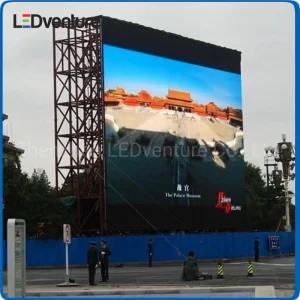
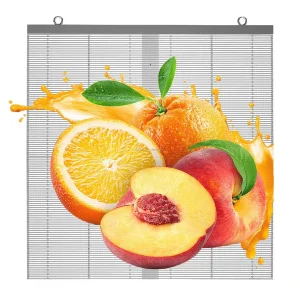
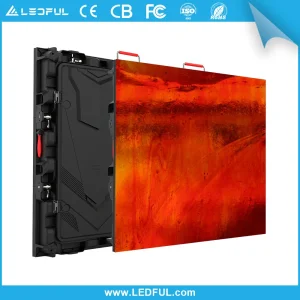
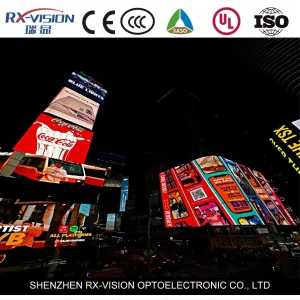
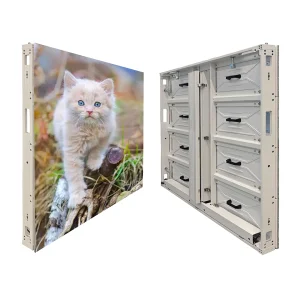
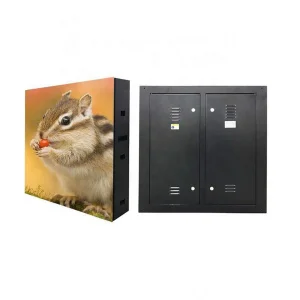
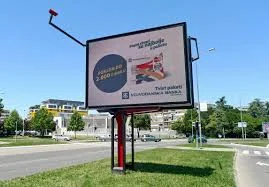
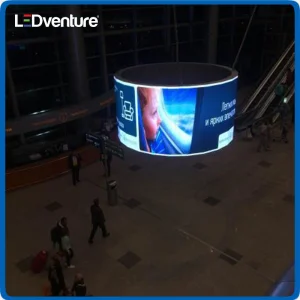
Optimizing visual quality, structural integrity, and local maintenance accessibility.
For installations around Market East, Center City, and shopping districts near City Hall, visual resolution is the primary performance driver. Pedestrians view these displays from as close as 10 feet. We recommend P3 or P4 Pixel Pitch displays using SMD (Surface Mount Device) configurations. These deliver clean typography, sharp static product images, and high-density resolution without pixelation, keeping municipal agencies and luxury retailers satisfied.
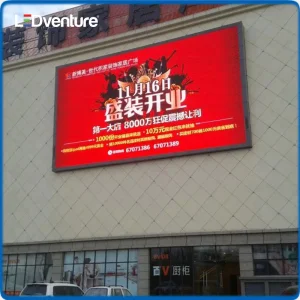
For high-speed automotive corridors, viewing distance transitions to several hundred feet, requiring rapid message ingestion. Large-format P8 or P10 fixed displays are ideal here. To cut through high glare and direct sunlight along exposed roadways, our displays are calibrated to a minimum of 7,500 nits, assuring high contrast and immediate readability for passing motorists.
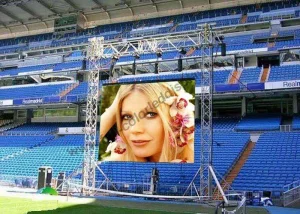
South Philadelphia's sports complex calls for specialized digital integration. Stadium displays require ultra-high refresh rates (minimum 3,840 Hz) to prevent flickering on live television broadcasts. Standardizing on high-speed IC drivers like the MBI5124 series ensures broadcast-ready clarity during fast-paced sporting events.
Shenzhen Aras LED Co., Ltd. is a global provider of premium LED digital display technology. Under our product line, we engineering-design, test, and deliver custom outdoor fixed panels, flexible indoor modules, transparent architectural displays, and event rentals to system integrators worldwide. Our 30,000㎡ manufacturing hub ensures rapid turnarounds, strict quality control, and full supply chain transparency.
Our direct-supply operational model allows us to collaborate directly with US engineering groups, eliminating local markups while offering factory-certified warranties, custom configuration drawings, and design assistance for major municipal developments.
When engineering an outdoor display, access style determines both installation depth and ongoing maintenance costs. Our designs support both options:
Insights on compliance, logistics, structural requirements, and technical capabilities.
Philadelphia’s Department of Licenses and Inspections (L&I) requires electrical and safety compliance. Your billboard must use components certified by an NRTL, such as UL (Underwriters Laboratories) listing mark (specifically UL 48 for signs and UL 8750 for LED equipment). Structural steel components require a Professional Engineer (PE) stamp confirming wind load ratings to state standards.
We manage logistics end-to-end, offering both CIF (Cost, Insurance, and Freight) to the Port of Philadelphia and DDP (Delivered Duty Paid) terms. Our logistics partners handle customs clearance, import documentation, and local transport to your staging yard or installation site.
Philly’s high summer humidity and freezing winters can stress diode packaging. We mitigate this by using high-grade Gold-wire or Copper-wire encapsulations (Nationstar or Kinglight) along with automated conformal coating runs to protect all PCBs from moisture ingress, reducing failure rates to less than 0.01% over a 5-year period.
Our displays integrate with industry-standard control systems, primarily NovaStar (including NovaLCT, VIP, and VN-series cloud players) and Colorlight. These support real-time health monitoring, automated brightness sensor control, cloud diagnostics, and email notifications in case of power or signal disruptions.
We provide a comprehensive 3-to-5-year warranty on all outdoor fixed installations. We ship 2% to 3% spare modules, power supplies, and receiving cards with every order. If a part fails, it can be hot-swapped within minutes, and the defective unit is sent back to our repair center for refurbishment.
Get in touch with our engineering team for detailed CAD drawings, electrical schematics, factory pricing quotes, and custom logistics planning tailored for the Mid-Atlantic region.
Send Inquiry Now Aras LED