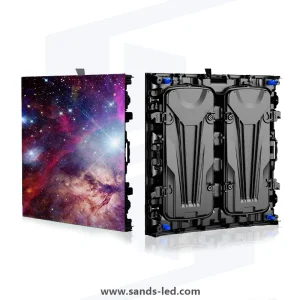
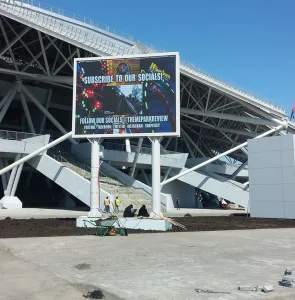
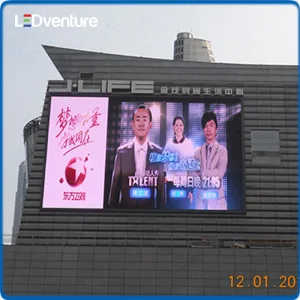
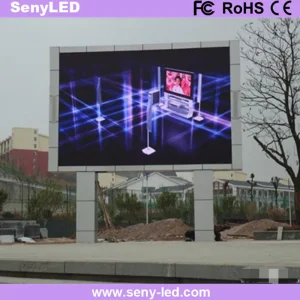
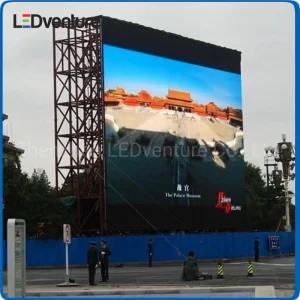
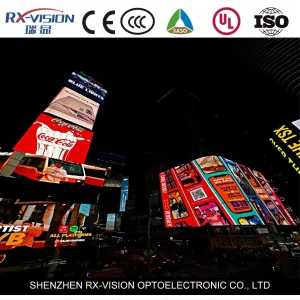
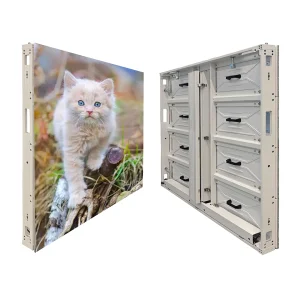
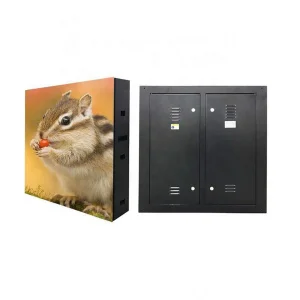
High-impact, high-brightness commercial displays configured specifically for regional retail hubs, expressways, and athletic facilities across Detroit.
Economic recovery, automotive prestige, and infrastructure modernization drive the demand for smart digital billboards.
Detroit, Michigan—internationally recognized as the "Motor City" and the historical heart of global automotive production—is undergoing a profound economic and visual transformation. Driven by commercial redevelopment in Downtown, Midtown, and major transit routes like the Interstate-75, I-94, and Woodward Avenue corridors, local businesses, real estate developers, and national brands are increasingly turning to Digital Out-Of-Home (DOOH) advertising to capture consumer attention.
Unlike traditional static signs, outdoor fixed LED billboards in Metro Detroit must serve dual functions. They must deliver high-definition, high-impact commercial advertisements that match the tech-forward identity of regional automotive and technology hubs, while maintaining mechanical and electrical integrity under Michigan's demanding environmental conditions.
From the freezing winter wind chill off Lake Erie to high-humidity summer peaks, fixed outdoor displays in Detroit require advanced thermal management, high ingress protection (IP65/IP66 ratings), and intelligent auto-dimming features to meet both city zoning guidelines and variable sunlight exposure.
"Implementing DOOH screens in Southeast Michigan requires deep knowledge of local wind-load compliance, winter heating requirements, and strict zoning regulations. We provide engineered solutions tailored to these exact parameters."
Navigating logistics, compliance, and custom configurations for cross-border engineering projects.
All permanent outdoor displays in Michigan must comply with the National Electrical Code (NEC) and obtain appropriate UL or ETL certifications. We configure our control boxes and power supplies to strictly meet North American safety and EMI standards (FCC Class A/B).
Detroit's proximity to the Great Lakes exposes outdoor structures to severe wind loads. Our engineers coordinate with local Michigan Professional Engineers (PE) to provide structural calculations for columns, foundations, and wall mounts.
To showcase premium brands without pixelation or color shifting, our billboards employ custom spectroradiometer-calibrated color accuracy and advanced gamma correction. Ads remain vibrant, accurate, and consistent over years of continuous operation.
Shenzhen Aras LED Co., Ltd. Factory is located in the China International Metro city-Shenzhen. As a global supplier of LED Display screens, LUMIVIS aims to create added value for customers around the world.
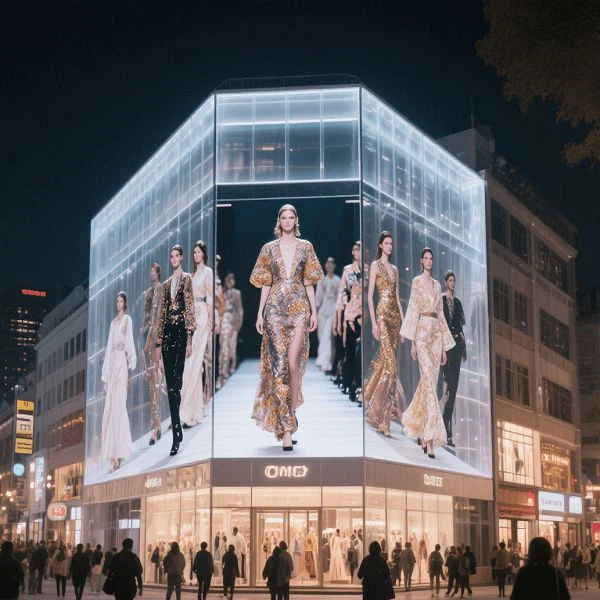
Our LED display production facility is equipped with complete manufacturing and testing lines, including module assembly, cabinet fabrication, aging testing, and final system inspection. With in-house capabilities, we ensure consistent quality from single-unit orders to large scale municipal DOOH projects.
To survive Detroit's winter-to-summer transition, our LED components are put through aggressive stress profiles:
Every installation is unique. As a trusted LED advertising screen supplier, we offer tailored LED display solutions based on project requirements, including:
Our engineers work with clients to deliver LED display solutions that align with budget, environment, and performance expectations. We can bring your ideas to life. From adjusting brightness and choosing lamp beads to shaping it uniquely, we tailor every detail to your needs. Let's create your impressive display.
Where DOOH engineering is heading over the next three to five years.
Traditional displays supply equal voltage to Red, Green, and Blue diodes, generating excess heat in the red channel. Common cathode technology routes dedicated, lower voltage directly to the red LED chip. This reduces power draw by up to 30%-40%, lowering operational utility costs in Michigan and extending product life.
By utilizing curved corners and ultra-high-contrast ratios, newer LED displays create glasses-free 3D visual illusions. These installations generate viral social media reach and command higher advertising rates along busy urban corridors in Downtown Detroit.
Next-gen fixed billboards incorporate air quality sensors, local traffic monitoring cameras, and smart diagnostic feedback. These features allow operators to check the status of power supplies and receiving cards remotely, reducing local technician dispatches.
Explore our full line of waterproof outdoor billboards configured for permanent installations. All original listings preserved below.
Technical answers regarding installation, certification, and operation in the Detroit area.
For highways with high speed limits (like I-94 or I-75) where viewing distances exceed 100 meters (328 feet), P8 or P10 pixel pitches offer the best balance between brightness, resolution, and cost. If the display is located closer to traffic or pedestrian walkways (e.g., Woodward Avenue), P5 or P6 is recommended for crisper visuals.
Yes. All our fixed outdoor cabinets use UL-certified power supplies, cables, and internal components. We can construct full systems with UL/ETL certification labels to ensure compliance with local Michigan electrical inspection requirements.
Our displays undergo rigorous thermal cycle testing from -30°C (-22°F) to 60°C (140°F). We utilize low-temperature power supplies and specialized outdoor cabinet alloys that do not contract or warp in freezing conditions. Additionally, we offer intelligent internal climate control fans and heating elements for extreme sub-zero installations.
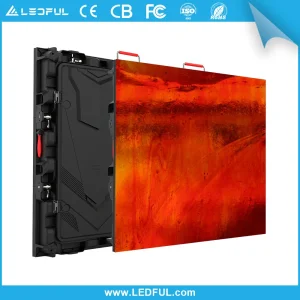
Front-service displays allow modules, power supplies, and cards to be replaced from the front of the screen. This is ideal for wall-mounted setups where space behind the display is limited. Rear-service displays are commonly used for standalone columns and double-sided highway billboards where access platforms are built behind the screen structure.
We integrate industry-standard control systems such as NovaStar, Colorlight, and Linsn. These systems support fiber-optic connections, 4G/5G remote cloud management, automated scheduling, brightness adjustment sensors, and immediate hardware health diagnostics.
 Aras LED